A Simple Household Cost Plan That Actually Sticks
A beginner-friendly way to map monthly costs and spot where a Support System could close a gap.
Member guide
When money feels tight, the usual advice is to “spend less.” It misses something important: a large share of a typical household budget is made up of costs that Support Systems are specifically designed to lower. Energy bills, utility costs, healthcare premiums, and certain taxes are not fixed in stone. A budget shows you where your money goes; Support Systems change how much certain categories cost in the first place. Put them together and you get a clear picture of your spending plus a list of programs that could shrink it.
That reframing matters because it changes who is in control. When you treat every bill as a fixed obligation, the only tool you have is sacrifice — eat out less, turn the heat down, skip the doctor. But many of those bills are negotiable in a way most people never realize, not because a company will lower them out of kindness, but because a program already exists to absorb part of the cost for households that qualify. Cost management is the skill of finding those programs and lining them up against your largest expenses.
“Cost management, done well, is less about willpower and more about knowing where to look. It is a navigation skill, not a discipline — the right energy program can solve a budget problem without anyone going hungry.”
— CEO - FounderEvery household has exactly two levers it can pull to free up money, and the most successful budgeters use both at the same time. The first lever is spending — the choices you make about how much to buy and how often. The second lever is cost — the underlying price of the things you have already decided you need. Traditional budgeting only touches the first lever. Support Systems are built to move the second.
Pulling only the spending lever is exhausting and has a floor: you can only cut so much before you are cutting into necessities. Pulling the cost lever, by contrast, has almost no downside. A lower energy bill does not mean a colder house; a prescription assistance program does not mean fewer pills; a property-tax offset does not mean a smaller home. The same life, for less money. That is why learning where the cost lever exists is the highest-value move a budget-conscious household can make.
You cannot manage what you have not measured. Before chasing any program, spend twenty minutes sorting a recent month of spending into five simple buckets. This is the foundation everything else builds on:

| Bucket | Typical Share of Budget | Where a Support System Can Help |
|---|---|---|
| Housing | Largest | Rental assistance, property-tax offsets, homebuyer programs |
| Energy & utilities | Moderate | Energy assistance, weatherization, utility discounts |
| Healthcare | Variable | Marketplace subsidies, Medicaid, prescription help |
| Essentials | Moderate | Nutrition, childcare, and transportation programs |
| Everything else | Smallest | Mostly spending choices, not program-driven |
Housing is almost always the largest line in a household budget, which makes it the most valuable place to find help. Because the number is so big, even a modest reduction frees up real money. For renters, that can mean rental assistance or utility help tied to the home. For owners, it can mean a property-tax offset or an energy-efficiency program that lowers the cost of keeping the home comfortable. The rule of thumb is simple: a small percentage saved on your biggest cost beats a large percentage saved on a small one.
Energy and utilities are the bucket Support Systems target most directly, and the help comes in more forms than most people expect:
Healthcare costs feel fixed, but they are often more reducible than any other category. Marketplace subsidies can shrink a monthly premium, Medicaid can cover a household that qualifies on income, community health centers charge on a sliding scale, and prescription programs quietly lower what you pay at the pharmacy. The hardest part is rarely that help is missing — it is that the pieces speak different languages and rarely point to one another.
Essentials — food, transportation, and childcare — are the day-to-day costs of simply running a household, and they are supported by a wide range of nutrition, childcare, and transit programs. Because these costs repeat every week, even a small ongoing reduction compounds into a meaningful annual saving. Childcare in particular is often the second-largest cost a young family carries, which makes it well worth checking for help.
The final bucket — debt payments, subscriptions, and discretionary spending — is the one Support Systems touch the least, and that is useful information. Because few programs target this category, it is the one place where the spending lever does most of the work. Trimming here is genuine budgeting; the other four buckets are where program knowledge pays off.
Once your spending is in buckets, the picture usually becomes obvious. One or two categories dominate, and those are the ones worth attacking first — both with smart budgeting and with the right Support System. The same dollars stay in the budget; the bill simply gets smaller. Chasing a small saving in a small bucket feels productive, but it rarely changes the month. Going after the largest cost you carry is where real breathing room comes from.
Cost management works best as a short, repeatable routine rather than a one-time project. The sequence is the same every time:
A few predictable mistakes hold households back, and all of them are easy to avoid once you know to watch for them:
None of this requires spreadsheets you will never open again or a discipline you cannot sustain. It requires a habit: a few times a year, sort your spending into five buckets, find the two that dominate, and ask whether a Support System could lower them. Pull the spending lever where it helps, and pull the cost lever everywhere a program exists. Done consistently, that simple loop turns cost management from a source of stress into a quiet, repeatable advantage — which is exactly what the rest of this library is here to help you build.
Behind every energy discount and cost program is a network of people working together — federal offices funding assistance, state energy teams running enrollment, and local utilities and nonprofits delivering the savings to real households. Knowing how these groups connect tells you exactly who to call when a bill climbs, and which program window to watch before the next season hits.

Energy is the category where Support Systems do the most visible work. Programs like the Low Income Home Energy Assistance Program (LIHEAP) help households offset heating and cooling costs, while weatherization programs reduce future bills by improving efficiency, and many utilities run their own discount or budget-billing plans. They follow the same four-part pattern as every Support System — and because enrollment is often seasonal, checking in early autumn, before winter demand peaks, is one of the most practical cost-management habits a household can build.

The first mistake is cutting essentials before checking for help — slashing the grocery budget to cover a heating spike while a perfectly good energy program goes unused. The second is assuming utility programs are only for people in crisis, when many use generous income limits and serve working households. A third is ignoring small recurring costs; subscriptions and fees feel minor alone but add up to a real bill. Trim the waste, and let Support Systems handle the big structural costs you cannot simply cut.
Unlock these in-depth guides to turn a simple budget into a real plan for lowering your monthly costs.
 Member
A beginner-friendly way to map monthly costs and spot where a Support System could close a gap.
Member guide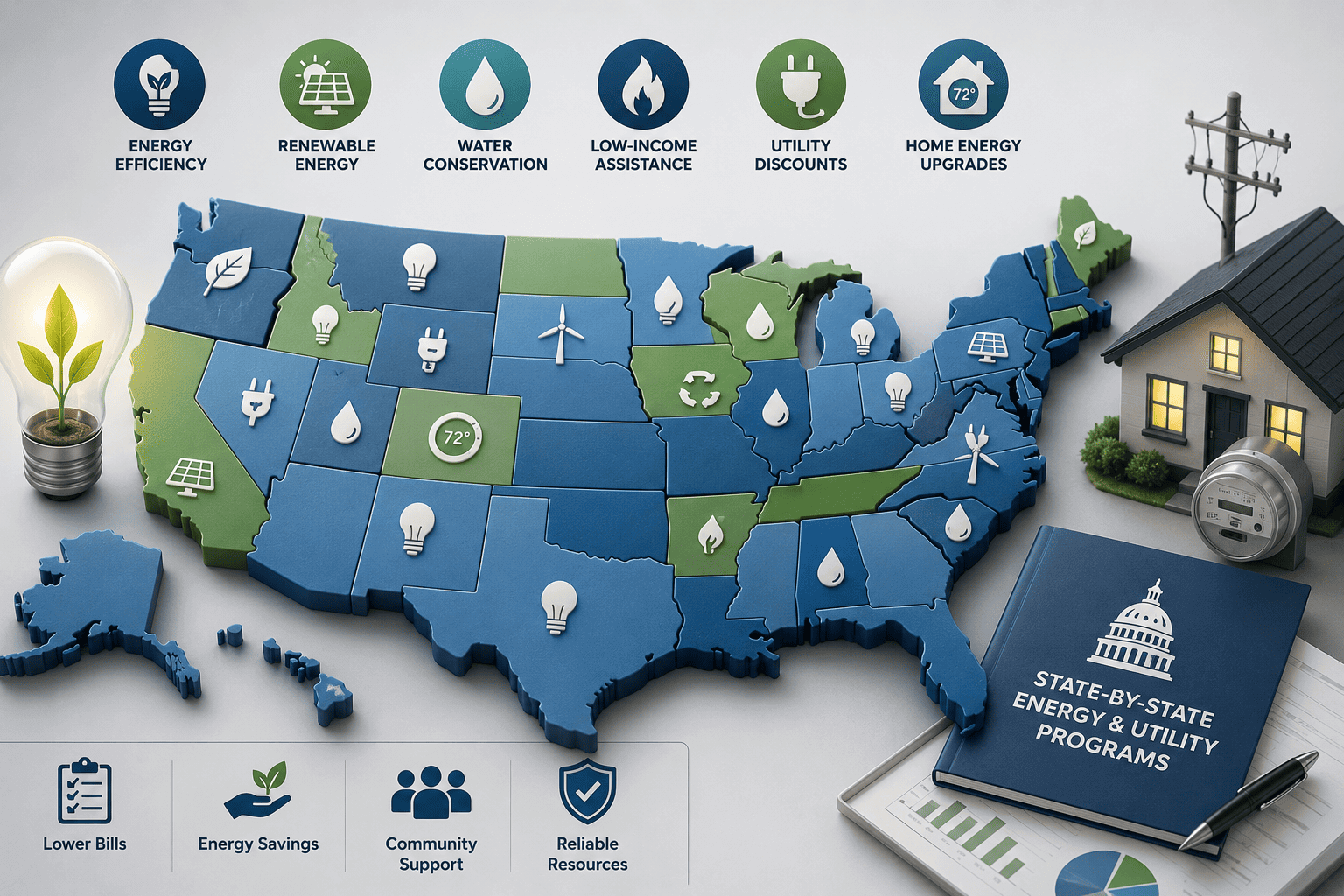 VIP
VIP
An in-depth, state-specific walkthrough of utility cost programs, refreshed each quarter.
VIP walkthrough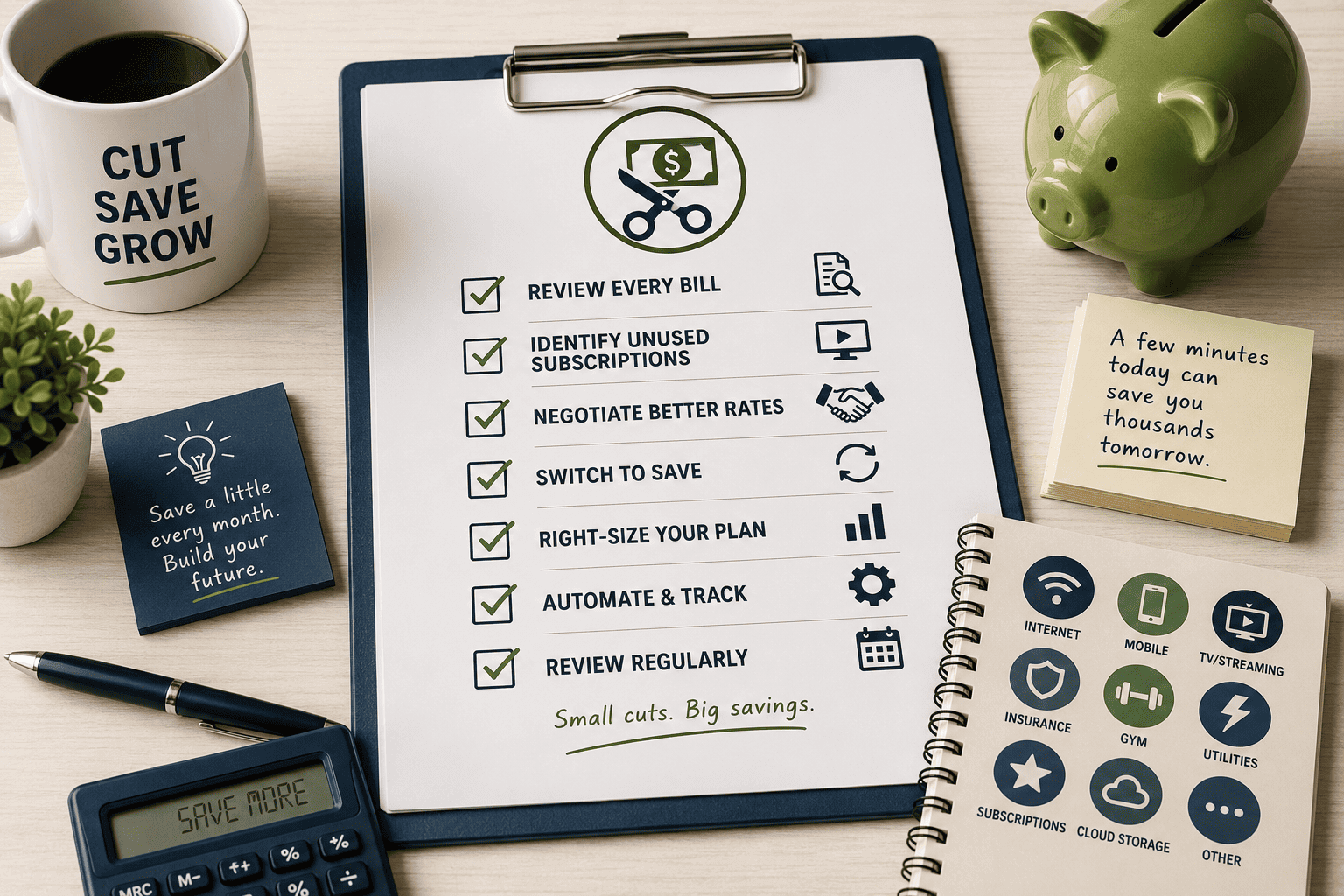 Member
A room-by-room, bill-by-bill review that surfaces the small costs quietly draining your budget.
Member guideThe free Household Cost Gap Analyzer takes about two minutes.