How Eligibility Is Decided (Income, Household Size & More)
The common factors programs use to decide who qualifies — and how to read the rules without the jargon.
Member guide
Most people meet a Support System at the worst possible moment — right after a layoff, a new baby, a rent increase, or a surprise medical bill. That is exactly when the language of these programs feels the most confusing. A Support System is simply a program, usually run by a government agency or a nonprofit, designed to lower a cost, cover a need, or offset a tax for households that qualify.
The word “system” matters more than it first appears. A single benefit is just one door, but a system is the whole building — a connected set of programs that, taken together, can carry a household through almost any rough patch. When you stop seeing isolated benefits and start seeing the system behind them, the entire landscape becomes far less intimidating. The heating assistance you applied for last winter, the marketplace plan that covered a surgery, and the tax credit that padded your refund are not random acts of luck. They are deliberate pieces of public and nonprofit infrastructure built to catch people exactly when life knocks them sideways.
It helps to remember why these programs exist in the first place. Every Support System was created because lawmakers, agencies, or community organizations identified a cost that households could not reasonably carry alone — the price of heating a home in January, the cost of a doctor visit without insurance, the rent that climbs faster than a paycheck. The program is the answer to that problem. Once you know which problem a program was built to solve, its rules suddenly read like a map instead of a maze. You are no longer guessing; you are matching your situation to the exact need the program was designed to meet.
“A heating-cost program, a healthcare marketplace, a tax credit, and a rental fund can all look completely different on the surface, yet they share the same underlying shape. Learn to see that shape, and the surface differences stop mattering.”
— CEO - FounderThat shared shape is the single most useful idea on this entire page. People burn out trying to memorize hundreds of program names, agency acronyms, and application portals. It is exhausting, and it is unnecessary. The programs change, the websites get redesigned, the income limits adjust every year — but the underlying structure almost never does. Master the structure once, and you can walk into any program, in any state, in any year, and know exactly what you are looking at and what to do next.
Almost every Support System, no matter how complicated it looks, can be broken into four simple questions. Memorize these four and you will never feel completely lost again:

| Question | What It Tells You | What to Look For |
|---|---|---|
| Who runs it | Where to go and whom to trust | Federal agency, state office, county, or nonprofit |
| Who it applies to | Whether your household qualifies | Household size, income limit, residency, life event |
| What it provides | How it closes your budget gap | Lower bill, covered service, tax offset, or voucher |
| How to explore it | The steps that turn it into action | Check eligibility, gather documents, meet the deadline |
Take the first question — who runs it — seriously, because it tells you where to go and whom to trust. A program run by a federal agency will have national rules and a federal website, but the people who actually process your application often sit in a state or county office down the road. Knowing the operator tells you which phone number to call, which office to visit, and whose decision is final. It also tells you how to spot impostors: legitimate Support Systems are run by identifiable public agencies or established nonprofits, never by a stranger who promises to “unlock” benefits for a fee.
The second question — who it applies to — is where most households make their costliest mistake. They glance at a single number, decide they earn too much, and close the tab. But eligibility is rarely about one number. It is a combination of factors, and you cannot judge it from a glance:
A family of five and a single renter can earn the same paycheck and land on opposite sides of the same income line. Until you have actually checked your own numbers against the program's published table, you simply do not know whether you qualify — and assuming you do not is how real help gets left on the table year after year.
The third question — what it provides — sorts every program into a small handful of buckets:
Once you can name what a program actually delivers, you can line it up against the specific gap in your own budget instead of collecting benefits at random. The goal is never to apply for everything — it is to apply for the things that close the gap in front of you.
The fourth question — how to explore it — is the one that turns understanding into action. The reliable sequence is the same almost everywhere:
Doing it in that order protects your time. There is no reason to spend an afternoon hunting down pay stubs and lease agreements for a program you were never eligible for — and no reason to miss one you clearly qualified for because the window quietly closed.
Support Systems are administered across three levels. Federal programs set nationwide rules but are often delivered through your state. State programs can expand on those rules or set different income limits. Local programs — run by counties, cities, utilities, and nonprofits — fill the gaps the larger programs miss, and they are the ones households overlook most.
Picture the three levels as a set of nested safety nets:
The practical lesson is to never stop at the federal level. The households that get the most support are the ones who check all three layers for the same need. A family facing a heating crisis might combine a federal energy-assistance benefit, a state supplement, and a one-time grant from a local charity — three separate programs, one warm home. Because the local layer is the least advertised and the hardest to find, it is also where the most help goes unclaimed. A few minutes asking your utility, your county social-services office, or a local nonprofit what they offer will often surface support no national website ever mentioned.
None of this requires you to become an expert in policy. It requires only a habit: when a cost lands on your household, pause and run it through the four questions and the three levels. Who runs a program that touches this cost? Who does it apply to, and is that me? What does it actually provide? And how do I explore it, step by step, across the federal, state, and local layers? Ask those questions consistently and you will move from feeling ambushed by the system to navigating it with quiet, practiced confidence — which is exactly what the rest of this library is here to help you build.
Behind every Support System is a network of people working together — federal offices setting the rules, state teams adapting them, and local nonprofits delivering them to real households. Understanding how these three levels collaborate is the key to navigating any program with confidence, and knowing exactly who to ask when you need help.

Program language is dense on purpose: it has to be precise. Look for the eligibility table before you read the prose, write down each program's definition of “household” and “income,” and separate the words “may” (options) from “must” (requirements). Finally, watch for deadlines — many programs only open at certain times of year.

The most damaging myth is “we probably make too much to qualify” — income limits vary widely and some programs are not income-based at all. Another is that using a Support System takes a benefit from someone who needs it more; most programs are funded to serve every eligible household. Replacing assumptions with a quick eligibility check is almost always worth the few minutes it takes.
Unlock these in-depth Member guides to go from understanding the basics to navigating real programs with confidence.
 Member
The common factors programs use to decide who qualifies — and how to read the rules without the jargon.
Member guide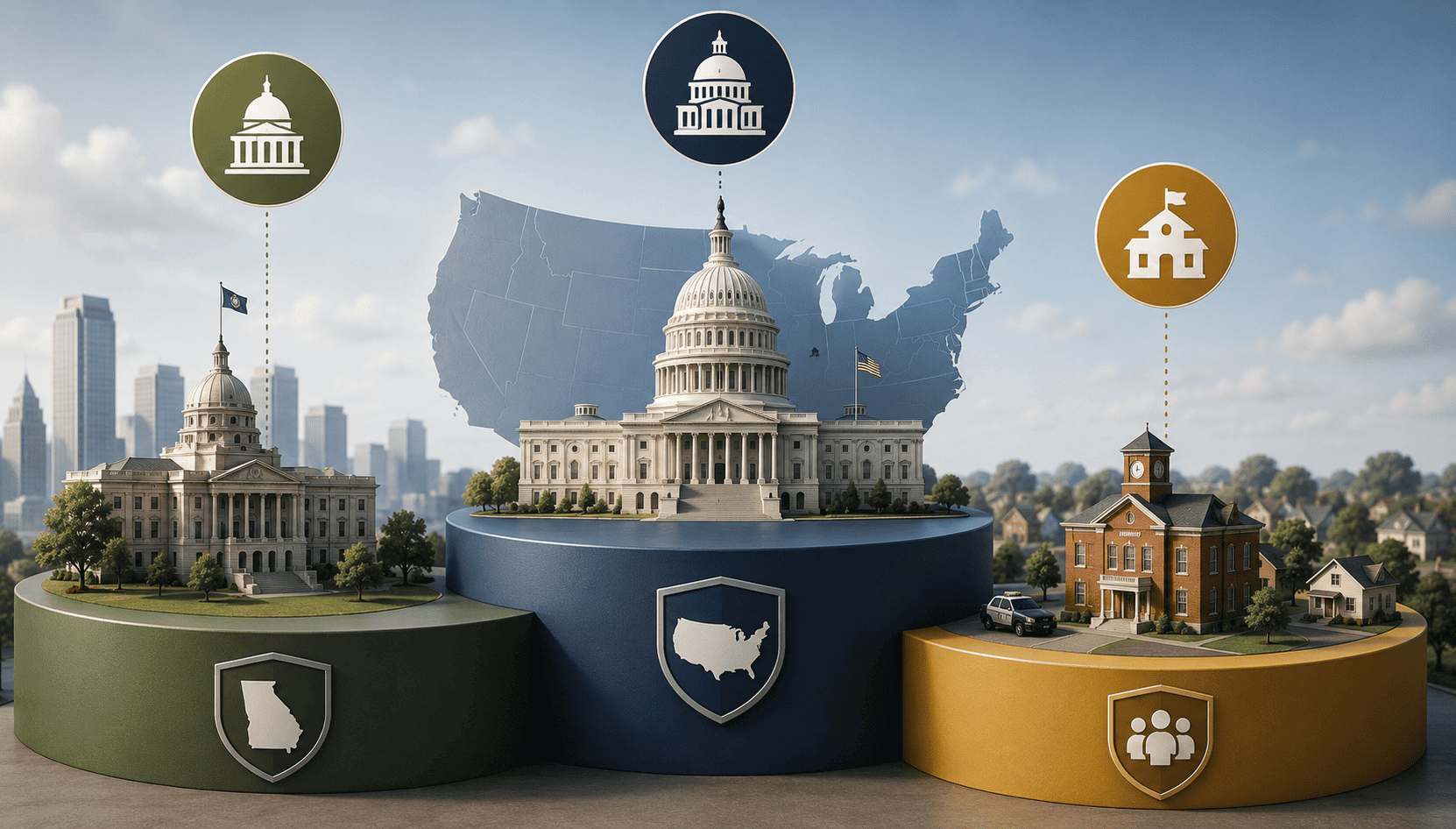 Member
Why the same Support System can look different in every state, and where to start looking.
Member guide Member
The paperwork most programs ask for, and how to prepare it once so you are ready for any application.
Member guideThe free Support System Finder takes about two minutes.